

Number Of Neutrons In Yttrium
What is Yttrium
Yttrium is a chemic chemical element with atomic number 39 which means at that place are 39 protons and 39 electrons in the atomic structure. The chemical symbol for Yttrium is Y.
Yttrium is a silvery-metallic transition metal chemically similar to the lanthanides and has often been classified as a "rare-earth element".
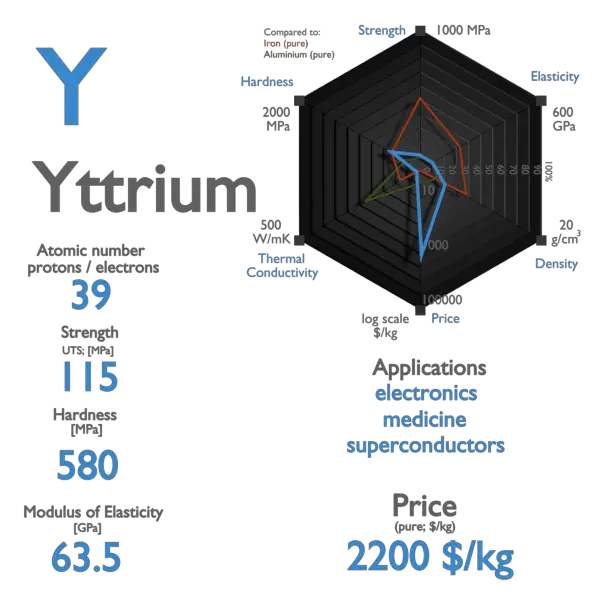
Yttrium – Properties
| Element | Yttrium |
|---|---|
| Atomic Number | 39 |
| Symbol | Y |
| Chemical element Category | Transition metal |
| Phase at STP | Solid |
| Atomic Mass [amu] | 88.90585 |
| Density at STP [g/cm3] | 4.472 |
| Electron Configuration | [Kr] 4d1 5s2 |
| Possible Oxidation States | +iii |
| Electron Analogousness [kJ/mol] | 29.vi |
| Electronegativity [Pauling calibration] | one.22 |
| 1st Ionization Energy [eV] | six.217 |
| Twelvemonth of Discovery | 1789 |
| Discoverer | Gadolin, Johan |
| Thermal properties | |
| Melting Bespeak [Celsius scale] | 1526 |
| Humid Indicate [Celsius scale] | 3345 |
| Thermal Conductivity [W/m Thou] | 17.2 |
| Specific Heat [J/g Chiliad] | 0.3 |
| Heat of Fusion [kJ/mol] | xi.4 |
| Rut of Vaporization [kJ/mol] | 363 |
See too: Properties of Yttrium
Atomic Mass of Yttrium
Diminutive mass of Yttrium is 88.90585 u.
Note that, each element may comprise more than isotopes, therefore this resulting atomic mass is calculated from naturally-occuring isotopes and their abundance.
The unit of measure for mass is thediminutive mass unit (amu). 1 atomic mass unit is equal to i.66 x 10-24 grams. 1 unified atomic mass unit is approximately the mass of one nucleon (either a single proton or neutron) and is numerically equivalent to 1 g/mol.
For 12C, the atomic mass is exactly 12u since the atomic mass unit of measurement is defined from it. The isotopic mass usually differs for other isotopes and is usually within 0.ane u of the mass number. For example, 63Cu (29 protons and 34 neutrons) has a mass number of 63, and an isotopic mass in its nuclear ground state is 62.91367 u.
There are ii reasons for the difference between mass number and isotopic mass, known as the mass defect:
- The neutron is slightly heavier than the proton. This increases the mass of nuclei with more than neutrons than protons relative to the diminutive mass unit of measurement scale based on 12C with equal numbers of protons and neutrons.
- The nuclear binding energy varies betwixt nuclei. A nucleus with greater bounden energy has lower total energy, and therefore a lower mass according to Einstein's mass-energy equivalence relation Eastward = mc 2. For 63Cu, the atomic mass is less than 63, so this must exist the dominant factor.
See also: Mass Number
Density of Yttrium
Density of Yttrium is 4.472g/cm3 .

Typical densities of diverse substances at atmospheric pressure.
Density is defined as the mass per unit of measurement book. It is an intensive holding, which is mathematically defined as mass divided by volume:
ρ = m/V
In other words, the density (ρ) of a substance is the full mass (thousand) of that substance divided by the total volume (V) occupied by that substance. The standard SI unit is kilograms per cubic meter (kg/g3 ). The Standard English unit is pounds mass per cubic foot (lbm/ft3 ).
See likewise: What is Density
See also: Densest Materials of the Globe

Electron Affinity and Electronegativity of Yttrium
Electron Analogousness of Yttrium is 29.6 kJ/mol.
Electronegativity of Yttrium is 1.22.
Electron Affinity
In chemistry and atomic physics, the electron analogousness of an atom or molecule is defined as:
the change in energy (in kJ/mole) of a neutral cantlet or molecule (in the gaseous stage) when an electron is added to the atom to course a negative ion.
Ten + e– → X– + energy Affinity = – ∆H
In other words, it tin can be expressed as the neutral atom's likelihood of gaining an electron. Note that ionization energies mensurate the trend of a neutral atom to resist the loss of electrons. Electron affinities are more than difficult to measure than ionization energies.
An atom of Yttrium in the gas phase, for example, gives off energy when it gains an electron to form an ion of Yttrium.
Y + eastward– → Y– – ∆H = Affinity = 29.half dozen kJ/mol
To utilize electron affinities properly, it is essential to go along rail of signs. When an electron is added to a neutral atom, energy is released. This analogousness is known every bit the outset electron affinity, and these energies are negative. By convention, the negative sign shows a release of energy. However, more energy is required to add together an electron to a negative ion which overwhelms any release of free energy from the electron zipper process. This affinity is known as the 2nd electron affinity, and these energies are positive.
Affinities of Nonmetals vs. Affinities of Metals
- Metals: Metals like to lose valence electrons to grade cations to take a fully stable shell. The electron affinity of metals is lower than that of nonmetals. Mercury most weakly attracts an extra electron.
- Nonmetals: Generally, nonmetals have more positive electron analogousness than metals. Nonmetals similar to gain electrons to form anions to have a fully stable electron shell. Chlorine most strongly attracts extra electrons. The electron affinities of the noble gases have non been conclusively measured, so they may or may not accept slightly negative values.
Electronegativity
Electronegativity, symbol χ, is a chemical property that describes the tendency of an atom to attract electrons towards this atom. For this purpose, a dimensionless quantity, the Pauling scale, symbol χ, is the most commonly used.
The electronegativity of Yttrium is:
χ = 1.22
In general, an atom's electronegativity is affected by both its atomic number and the distance at which its valence electrons reside from the charged nucleus. The higher the associated electronegativity number, the more an element or compound attracts electrons towards it.
The most electronegative atom, fluorine, is assigned a value of four.0, and values range down to cesium and francium, which are the least electronegative at 0.vii.

Kickoff Ionization Energy of Yttrium
Get-go Ionization Energy of Yttrium is half dozen.217 eV.
Ionization energy, besides called ionization potential, is the energy necessary to remove an electron from the neutral atom.
X + energy → X+ + e−
where X is any atom or molecule capable of being ionized, X+ is that atom or molecule with an electron removed (positive ion), and e− is the removed electron.
A Yttrium atom, for example, requires the following ionization energy to remove the outermost electron.
Y + IE → Y+ + due east− IE = vi.217 eV
The ionization energy associated with removal of the starting time electron is nigh usually used. The norththursday ionization energy refers to the amount of energy required to remove an electron from the species with a charge of (n-1).
1st ionization energy
Ten → Ten+ + due east−
2nd ionization energy
Ten+ → Ten2+ + e−
tertiary ionization energy
Xii+ → Teniii+ + e−
Ionization Energy for dissimilar Elements
In that location is ionization free energy for each successive electron removed. The electrons that circumvolve the nucleus motion in adequately well-defined orbits. Some of these electrons are more than tightly bound in the atom than others. For case, just 7.38 eV is required to remove the outermost electron from a lead atom, while 88,000 eV is required to remove the innermost electron. Helps to understand the reactivity of elements (peculiarly metals, which lose electrons).
In full general, the ionization free energy increases moving up a group and moving left to the right across a period. Moreover:
- Ionization free energy is lowest for the alkali metals, which have a single electron outside a closed shell.
- Ionization energy increases beyond a row on the periodic maximum for the noble gases which take closed shells.
For example, sodium requires only 496 kJ/mol or 5.xiv eV/atom to ionize it. On the other manus, neon, the noble gas, immediately preceding information technology in the periodic table, requires 2081 kJ/mol or 21.56 eV/atom.

Yttrium – Melting Point and Boiling Betoken
Melting point of Yttrium is 1526°C.
Boiling point of Yttrium is 3345°C.
Notation that these points are associated with the standard atmospheric pressure level.
Boiling Point – Saturation
In thermodynamics, saturationdefines a condition in which a mixture of vapor and liquid tin can exist together at a given temperature and pressure. The temperature at whichvaporization (boiling) starts to occur for a given pressure is called the saturation temperature orboiling betoken. The pressure at which vaporization (boiling) starts to occur for a given temperature is chosen the saturation force per unit area. When considered as the temperature of the reverse change from vapor to liquid, information technology is referred to as the condensation point.
Melting Point – Saturation
In thermodynamics, the melting bespeakdefines a condition in which the solid and liquid tin be in equilibrium. Calculation estrus volition catechumen the solid into a liquid with no temperature change. The melting bespeak of a substance depends on pressure and is usually specified at standard pressure. When considered as the temperature of the reverse change from liquid to solid, it is referred to as the freezing betoken or crystallization indicate.

Yttrium – Specific Estrus, Latent Rut of Fusion, Latent Estrus of Vaporization
Specific oestrus of Yttrium is 0.3 J/g K.
Latent Heat of Fusion of Yttrium is 11.4 kJ/mol.
Latent Heat of Vaporization of Yttrium is 363 kJ/mol.
Specific Heat
Specific heat, or specific heat capacity,is a belongings related to internal energy that is very important in thermodynamics. Theintensive propertiesc5 and cp are defined for pure, simple compressible substances as partial derivatives of theinternal energyu(T, v) andenthalpyh(T, p) , respectively:
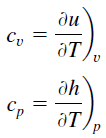
 where the subscriptsv andp denote the variables held fixed during differentiation. The propertiescvandcp are referred to equallyspecific heats(orestrus capacities) because, under certain special conditions, they relate the temperature change of a system to the amount of energy added by heat transfer. Their SI units are J/kg Thousand orJ/mol K.
Different substances are affected todifferent magnitudes by theimprover of oestrus. When a given amount of heat is added to unlike substances, their temperatures increase by unlike amounts.
Heat capacity is an extensive property of affair, pregnant it is proportional to the size of the system.Heat capacity C has the unit of free energy per degree or energy per kelvin. When expressing the same phenomenon every bit an intensive property, theheat capacity is divided past the corporeality of substance, mass, or volume. Thus the quantity is independent of the size or extent of the sample.

Latent Heat of Vaporization

In general, when a material changes phase from solid to liquid or from liquid to gas, a certain corporeality of energy is involved in this change of phase. In the example of liquid to gas phase change, this corporeality of free energy is known as the enthalpy of vaporization (symbol ∆Hvap; unit: J), also known as the (latent) rut of vaporization or oestrus of evaporation. As an example, see the figure, which describes the stage transitions of water.
Latent rut is the corporeality of heat added to or removed from a substance to produce a modify in phase. This energy breaks downwards the attractive intermolecular forces and must provide the energy necessary to expand the gas (the pΔV work). When latent rut is added, no temperature change occurs. The enthalpy of vaporization is a part of the pressure at which that transformation takes identify.
Latent Estrus of Fusion
In the case of solid to liquid phase change, the alter in enthalpy required to change its land is known as the enthalpy of fusion (symbol ∆Hfus; unit: J), also known as the (latent) heat of fusion. Latent estrus is the amount of heat added to or removed from a substance to produce a phase change. This energy breaks downwards the attractive intermolecular forces and also must provide the energy necessary to aggrandize the system (the pΔV work).
The liquid phase has college internal energy than the solid phase. This means energy must be supplied to a solid in gild to melt it, and energy is released from a liquid when information technology freezes because the molecules in the liquid experience weaker intermolecular forces so have college potential free energy (a kind of bond-dissociation free energy for intermolecular forces).
The temperature at which the phase transition occurs is the melting betoken.
When latent estrus is added, no temperature change occurs. The enthalpy of fusion is a function of the pressure level at which that transformation takes place. By convention, the pressure is assumed to exist 1 atm (101.325 kPa) unless otherwise specified.

Yttrium in Periodic Table
| Hydrogen 1 H | Helium ii He | ||||||||||||||||||
| Lithium 3 Li | Beryllium 4 Be | Boron v B | Carbon 6 C | Nitrogen 7 N | Oxygen 8 O | Fluorine 9 F | Neon 10 Ne | ||||||||||||
| And thendium eleven Na | Magnesium 12 Mg | Aluminium 13 Al | Silicon 14 Si | Phosphorus 15 P | Sulfur 16 S | Chlorine 17 Cl | Argon 18 Ar | ||||||||||||
| Potassium nineteen K | Calcium twenty Ca | Browsedium 21 Sc | Titanium 22 Ti | Vanadium 23 V | Chromium 24 Cr | Manganese 25 Mn | Atomic number 26 26 Fe | Cobalt 27 Co | Nickel 28 Ni | Copper 29 Cu | Zinc thirty Zn | Gallium 31 Ga | Germanium 32 Ge | Arsenic 33 As | Selenium 34 Se | Bromine 35 Br | Krypton 36 Kr | ||
| Rubidium 37 Rb | Strontium 38 Sr | Yttrium 39 Y | Zirconium 40 Zr | Niobium 41 Nb | Molybdenum 42 Mo | Technetium 43 Tc | Ruthenium 44 Ru | Rhodium 45 Rh | Palladium 46 Pd | Silver 47 Ag | Cadmium 48 Cd | Indium 49 In | Tin l Sn | Antimony 51 Sb | Tellurium 52 Te | Iodine 53 I | Xenon 54 Xe | ||
| Caesium 55 Cs | Barium 56 Ba | Lanthanum 57 La |  | Hafnium 72 Hf | Tantalum 73 Ta | Tungsten 74 W | Rhenium 75 Re | Osmium 76 Os | Iridium 77 Ir | Platinum 78 Pt | Gold 79 Au | Mercury eighty Hg | Thallium 81 Tl | Lead 82 Pb | Bismuth 83 Bi | Polonium 84 Po | Astatine 85 At | Radon 86 Rn | |
| Francium 87 Fr | Radium 88 Ra | Actinium 89 Air-conditioning |  | Rutherfordium 104 Rf | Dubnium 105 Db | Seaborgium 106 Sg | Bohrium 107 Bh | Hassium 108 Hs | Meitnerium 109 Mt | Darmstadtium 110 Ds | Roentgenium 111 Rg | Copernicium 112 Cn | Nihonium 113 Nh | Flerovium 114 Fl | Moscovium 115 Mc | Livermorium 116 Lv | Tennessine 117 Ts | Oganesson 118 Og | |
| | Cerium 58 Ce | Praseodymium 59 Pr | Neodymium 60 Nd | Promethium 61 Pm | Samarium 62 Sm | Europium 63 Eu | Gadolinium 64 Gd | Terbium 65 Tb | Dysprosium 66 Dy | Holmium 67 Ho | Erbium 68 Er | Thulium 69 Tm | Ytterbium lxx Yb | Lutetium 71 Lu | |||||
| | Thorium 90 Th | Protactinium 91 Pa | Uranium 92 U | Neptunium 93 Np | Plutonium 94 Pu | Americium 95 Am | Curium 96 Cm | Berkelium 97 Bk | Californium 98 Cf | Einsteinium 99 Es | Fermium 100 Fm | Mendelevium 101 Physician | Nobelium 102 No | Lawrencium 103 Lr | |||||
–
–
–

Number Of Neutrons In Yttrium,
Source: https://www.nuclear-power.com/Yttrium-properties/
Posted by: walkerpromaged.blogspot.com
0 Response to "Number Of Neutrons In Yttrium"
Post a Comment